


Marketing
Privacy and Performance: Why Server-Side Tracking Is the Future
From cookies to servers: A guide to modern data tracking.
In e-commerce, companies are constantly challenged to find the right balance between effective data usage and privacy requirements.
At the latest, with Google's announcement that it would end support for so-called third-party cookies in the Google Chrome browser at the beginning of 2025, every company doing online marketing should be addressing this topic. The impact driven by European legislation will have major consequences for the online advertising industry, since many existing ad technologies are based on third-party cookies.
One solution is server-side tracking. This article is designed to give you an overview of both approaches - server-side tracking and cookie tracking.
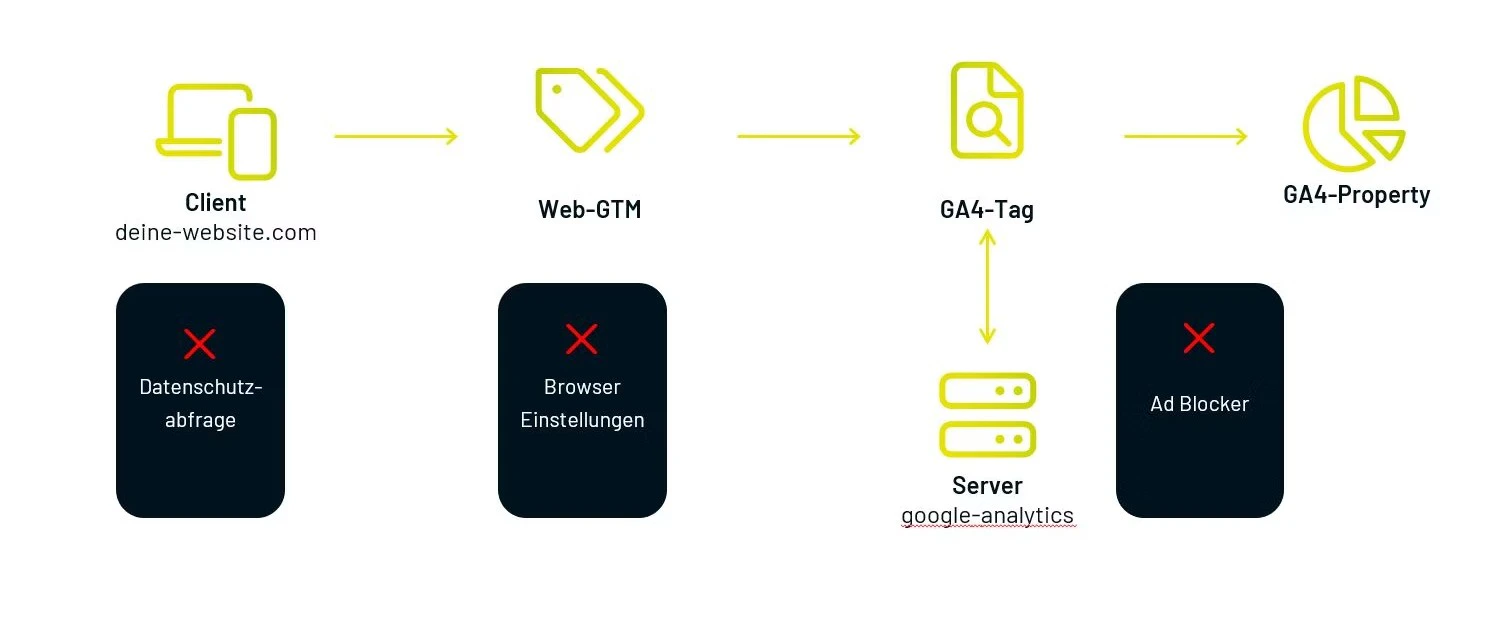
Server-side tracking, on the other hand, shifts data collection from the client side (the user's browser) to the company's server. This method gives you direct control over the data, bypasses browser restrictions, and improves data security because it is less visible and harder to manipulate.
Server-side tracking offers major privacy advantages by minimizing the amount of personal data stored and processed on the client side (the user's device). By moving data processing to the server, it becomes less vulnerable to third-party access, for example through malware in the browser. It also makes it easier to comply with privacy laws such as the GDPR, since data control and processing take place in a protected environment.
Implementing server-side tracking requires server capacity, supported for example by cloud services such as AWS or Google Cloud. Privacy regulations also require clear communication about how and why data is being collected, which is especially important with server-side tracking, where data processing is less transparent to the user.
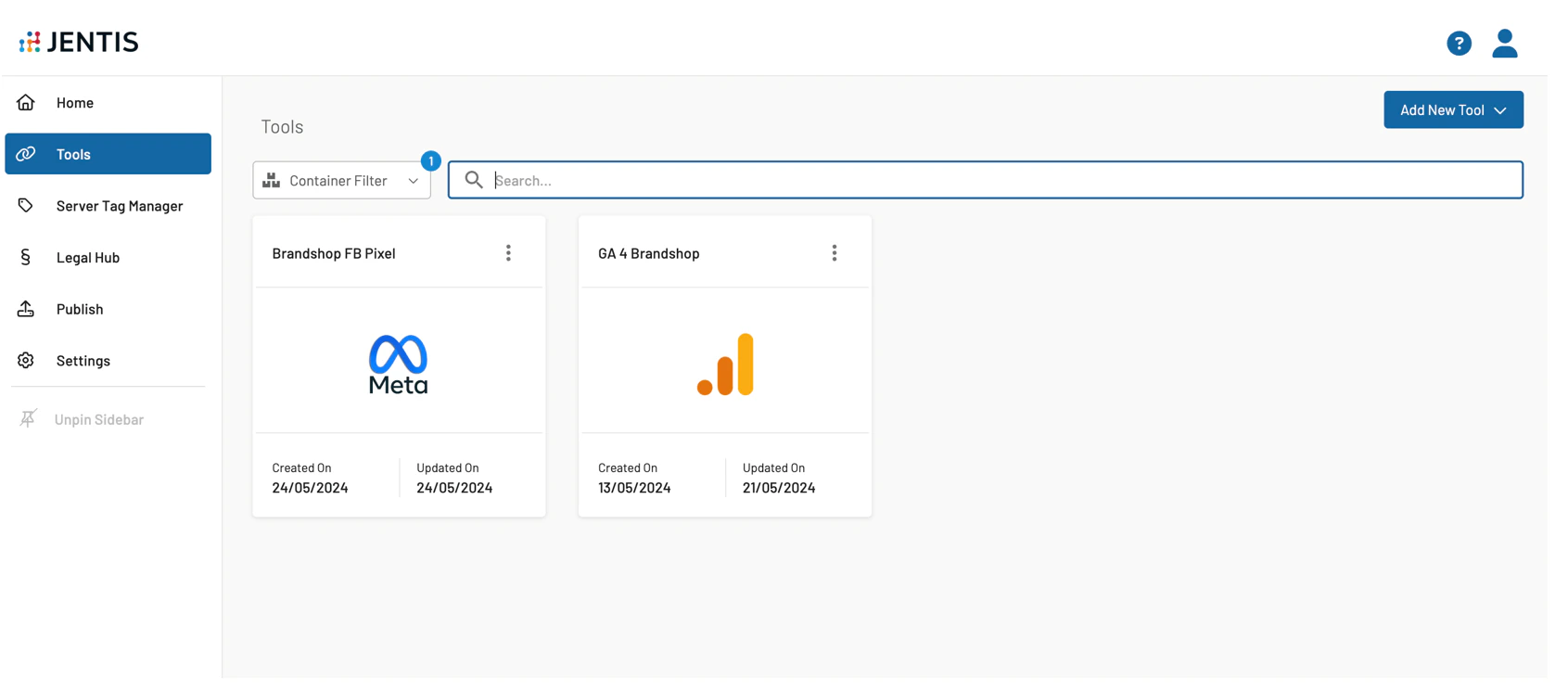
Screenshot from Jentis
With our tracking solution, you can count on a flexible and secure platform that effectively supports your online marketing strategies while ensuring privacy compliance. Just get in touch - we'd be happy to advise you on our solution.
At the latest, with Google's announcement that it would end support for so-called third-party cookies in the Google Chrome browser at the beginning of 2025, every company doing online marketing should be addressing this topic. The impact driven by European legislation will have major consequences for the online advertising industry, since many existing ad technologies are based on third-party cookies.
One solution is server-side tracking. This article is designed to give you an overview of both approaches - server-side tracking and cookie tracking.
What exactly is server-side tracking, and how does it differ from traditional cookie tracking?
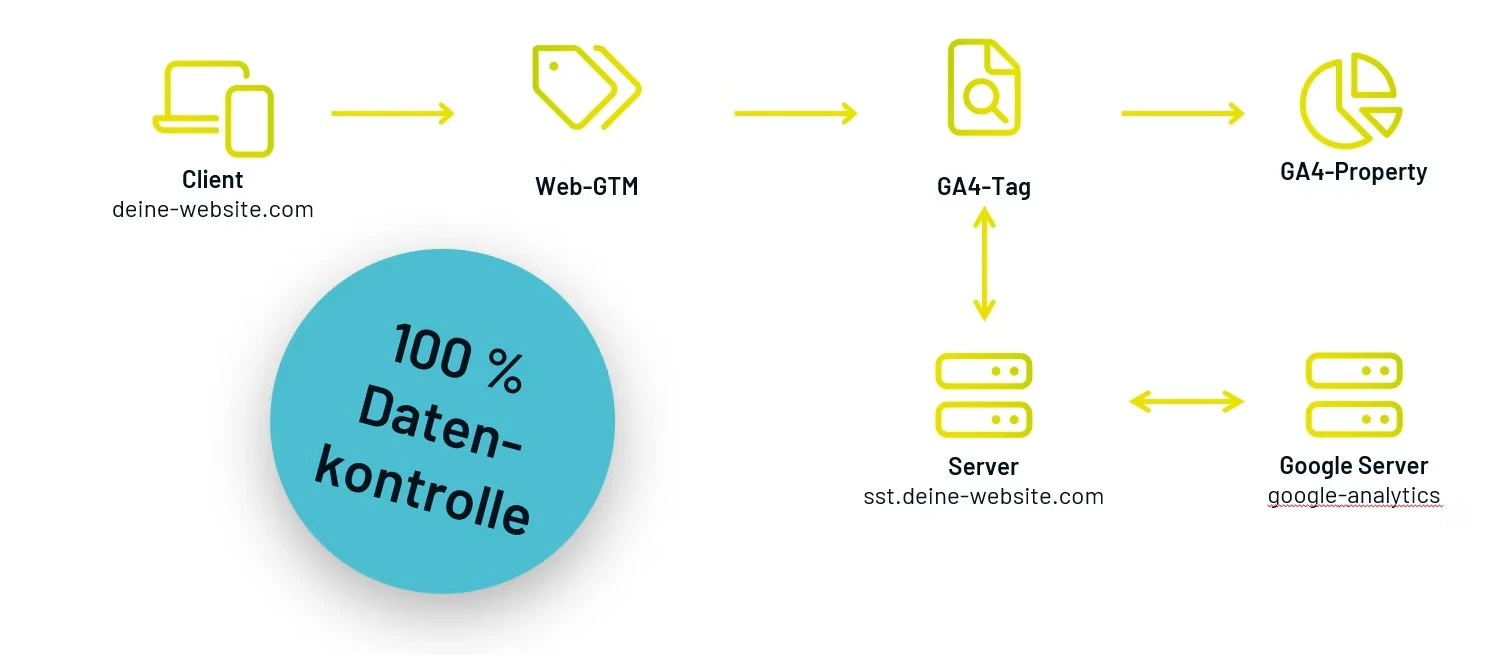
Cookie tracking is based on small files stored on a user's device when they visit a website. These cookies collect information about user behavior and preferences, helping marketers create personalized experiences. The downside? Cookies are subject to strict privacy regulations, and modern browsers and ad blockers can limit their functionality. Over the past few years, growing data loss has already become clear.Server-side tracking, on the other hand, shifts data collection from the client side (the user's browser) to the company's server. This method gives you direct control over the data, bypasses browser restrictions, and improves data security because it is less visible and harder to manipulate.
How server-side tracking works
What specific privacy benefits does server-side tracking offer compared to cookie tracking?
Server-side tracking offers major privacy advantages by minimizing the amount of personal data stored and processed on the client side (the user's device). By moving data processing to the server, it becomes less vulnerable to third-party access, for example through malware in the browser. It also makes it easier to comply with privacy laws such as the GDPR, since data control and processing take place in a protected environment.
How does implementing server-side tracking affect the user experience on my website?
One of the biggest strengths of server-side tracking is the improvement in user experience. By shifting data processing from the client to the server, browsers have less work to do, which leads to faster website load times. This not only improves the user experience, but can also positively impact a website's visibility in search engines as well as conversion rates.How client-side tracking works
What technical resources and skills are required to successfully implement and manage server-side tracking?
Implementing server-side tracking requires server capacity, supported for example by cloud services such as AWS or Google Cloud. Privacy regulations also require clear communication about how and why data is being collected, which is especially important with server-side tracking, where data processing is less transparent to the user.
Can small and mid-sized companies also benefit from server-side tracking, or is it mainly suited for larger organizations?
Although server-side tracking requires a meaningful investment in technology, smaller companies can benefit from it too, especially if they serve privacy-sensitive industries or need high-quality data analysis, for example for online marketing. Since many advertisers are currently neglecting this topic, you can expect a first-mover advantage if you switch to server-side tracking now. Together with our partner Jentis, we provide our customers with a complete solution at manageable costs. You'll learn more below.Comparing the methods: pros and cons
Server-side tracking
Advantages:- Higher data quality and security: Since data is processed on the server, it is less vulnerable to manipulation by third parties.
- Better performance: Less load on the user's browser leads to faster loading times.
- Advanced data manipulation options: Data can be filtered or modified before storage or analysis.
- Privacy compliance: Easier management of privacy requirements because data processing happens in controlled environments.
- Higher costs: Servers and technical infrastructure create additional costs.
- Technical complexity: Requires advanced technical knowledge and resources for setup and maintenance.
Cookie tracking
Advantages:- Easy implementation: Widely used and supported by many platforms and tools.
- Direct user interaction: Enables direct collection of user preferences and interactions on the client side.
- Privacy restrictions: Strictly regulated, especially in the EU under the GDPR.
- Susceptible to blocking: Browser settings and ad blockers can significantly reduce effectiveness.
Server-side tracking powered by Jentis
Many dc customers may be wondering what the best solution is. The key is finding a tracking solution that is not only efficient, but also user-friendly and compliant with the strictest privacy standards. We chose a solution with JENTIS. Our solution was specifically designed to meet these requirements while making implementation and day-to-day handling as simple as possible. Here are the benefits we offer:- Low implementation effort: Our system is designed so you can get started quickly and without major technical effort. Setup is straightforward, so you can launch right away without significant interruptions or long onboarding times.
- 100+ connectors out of the box: We know every organization has different needs. That's why we offer a wide range of more than 100 preinstalled connectors that integrate seamlessly with the most common platforms and services, such as Meta, Google Ads, Google Analytics, and more. Our solution creates instant connections to optimize your data flows.
- New plugins on request: Your needs evolve, and our solution evolves with them. If you have specific requirements, we can develop and integrate new plugins on request. This tailored approach ensures your unique business needs are always supported while you benefit from the latest technological developments.
- Data processing on secure EU servers: The security of your data is our top priority. That's why data is processed exclusively on secure servers within the EU that are subject to the strictest privacy laws. With this localized data processing, we not only guarantee GDPR compliance, but also ensure your information stays safe and protected.
Screenshot from Jentis
With our tracking solution, you can count on a flexible and secure platform that effectively supports your online marketing strategies while ensuring privacy compliance. Just get in touch - we'd be happy to advise you on our solution.